

Cupping Therapy (Hijama)
A complementary treatment approach performed with negative pressure that aims to support circulation and contribute to a feeling of physical relaxation and cleansing. Cupping therapy is a method whose historical origins go back to very early times and which has been used by different cultures in both Eastern and Western medicine. Today, it is approached as a complementary practice, together with the follow-up and assessment of modern medicine.
At Dr. Tuba Öztürk Demir Medical Aesthetics Clinic, cupping therapy is planned under sterile conditions, under a physician’s supervision and with the person’s general health taken into account.
What Is Cupping Therapy (Hijama)?
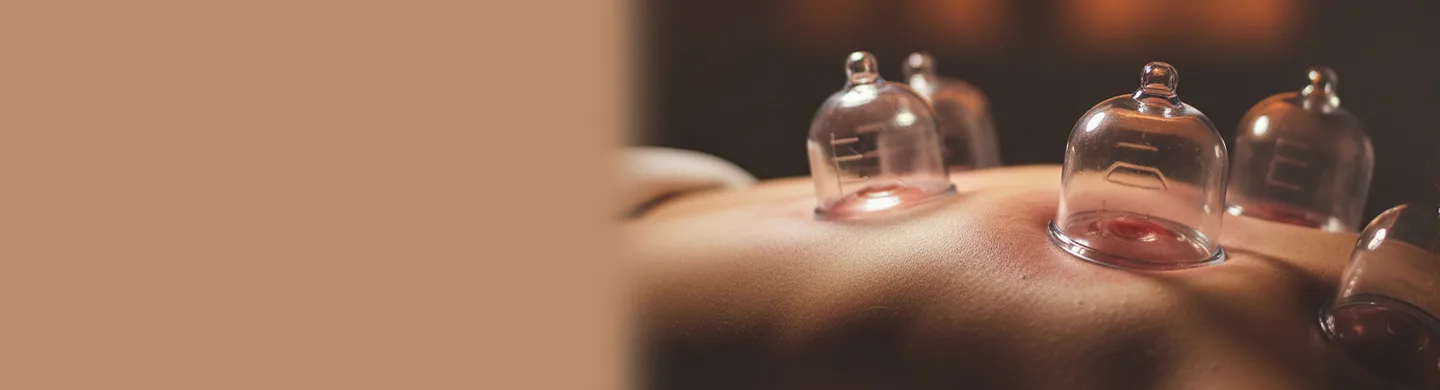
Cupping therapy is based on the principle of creating negative pressure by placing special cups on the skin. This negative pressure aims to help increase blood flow and stimulate circulation in the treated area.
In traditional practice, two main approaches can be seen:
- Dry Cupping: Only a vacuum effect is created with cups placed on the skin.
- Wet Cupping (Hijama): After superficial scratches are made at points determined by the physician, the blood that collects in this area is drawn out with the cup.
The method and areas to be used at our clinic are determined by a physician’s assessment.
What Is the Purpose of Cupping Therapy?
Rather than a “treatment protocol” in the modern sense, cupping therapy aims to:
- Support circulation,
- Help ease muscle tension and the feeling of physical strain,
- Create a feeling of relaxation and lightness in the person.
In this respect, it is regarded as a complementary method.
This practice can be thought of as a supportive approach to easing:
- The feeling of physical strain created by the pace of daily life,
- Complaints of tension that arise after long periods of desk work.
The effects and the benefit felt may be different for each individual; for this reason, cupping therapy should be approached as a personal experience.
How Is Cupping Therapy Performed?
Initial Consultation and Assessment
Your existing medical conditions, any surgeries you have had, the medications you take and your general health are assessed in detail by the physician. If you use blood thinners or have chronic conditions or any special circumstances, these must be mentioned.
Area Selection and Preparation
The areas to be treated are determined (the back and certain reflex areas are generally preferred). The skin is cleaned with sterile materials and care is taken to follow hygiene rules.
Placing the Cups
Cups capable of creating negative pressure are placed on the designated points. If hijama is to be performed, the physician makes the superficial scratches in a controlled manner and then completes the procedure by drawing the blood from this area with the cup.
Aftercare
After the treatment, the skin is cleaned and, if necessary, covered with a sterile bandage. Your physician will explain recommendations such as not bathing for the first 24 hours and keeping the area clean and warm.
In Which Cases Can It Be Considered?
Cupping therapy may mostly be chosen as a complementary method by people with the following concerns:
- A feeling of tension in the neck, back and lower back,
- Stress and physical fatigue after long periods of working while seated,
- A general feeling of needing cleansing and lightness.
These treatments are not a substitute for medical treatment on their own; where necessary, they should be regarded as supportive, alongside the medications and treatments planned by your doctor.
Who May It Not Be Suitable For?
In some cases, cupping therapy and hijama may not be recommended. For example:
- Bleeding and clotting disorders,
- People taking blood-thinning medication (without a physician’s approval),
- Severe anemia,
- Areas with an active infection or skin disease,
- Pregnancy and breastfeeding (a physician’s decision is required depending on the situation),
- Certain specific diseases related to the immune system.
For this reason, before deciding on cupping therapy, a detailed physician assessment must be carried out and an individual risk–benefit analysis taken into account.
Dr. Tuba Öztürk Demir’s Approach to Cupping Therapy
At our clinic, cupping therapy (hijama):
Is performed by considering traditional knowledge together with modern medical approaches.
Our core principle:
As with every treatment: health first, then comfort and naturalness.
For this reason:
Sterile working conditions, the use of single-use materials and a detailed review of your medical history are essentials for us.
If you would like to see cupping therapy as a supportive step toward feeling more balanced, lighter and more relaxed, you can book an appointment at our clinic so that we can assess the most suitable plan for you together.
Cupping Therapy (Hijama): Frequently Asked Questions
What is cupping therapy (hijama)?
Cupping therapy is based on the principle of creating negative pressure by placing special cups on the skin. This negative pressure aims to help increase blood flow and stimulate circulation in the treated area.
What is the difference between dry cupping and wet cupping (hijama)?
In dry cupping, only a vacuum effect is created with cups placed on the skin. In wet cupping (hijama), superficial scratches are made at points determined by the physician, and the blood that collects in this area is then drawn out with the cup.
What should be kept in mind after cupping therapy?
After the treatment, the skin is cleaned and, if necessary, covered with a sterile bandage. Your physician will explain recommendations such as not bathing for the first 24 hours and keeping the area clean and warm.
Who may cupping therapy not be suitable for?
Cupping therapy and hijama may not be recommended in cases of bleeding and clotting disorders, use of blood-thinning medication without a physician's approval, severe anemia, areas with an active infection or skin disease, pregnancy and breastfeeding, and certain specific diseases related to the immune system. For this reason, a detailed physician assessment must be carried out before deciding.
The information on this page is for general information only and does not replace diagnosis or treatment. Results may vary from person to person. The approach suitable for you is determined after a medical examination.