

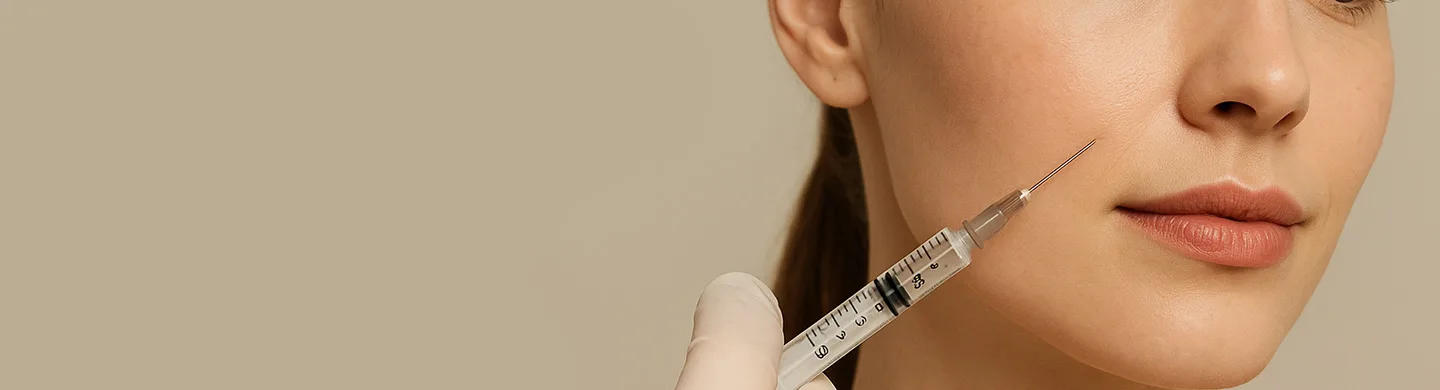
Dr. Tuba’s Approach to Dermal Fillers: “Less Is More”
These are natural-looking injectable treatments that help balance facial contours, reduce volume loss and soften the appearance of fine lines.
Over the years, the fatty tissue in our face diminishes, the skin begins to lose its elasticity, and hollows, shadows and fine lines become more noticeable in certain areas. Dermal fillers are medical aesthetics procedures that aim to make the face look more balanced, more rested and brighter by supporting the areas where volume has been lost.
At Dr. Tuba Öztürk Demir Medical Aesthetics Clinic, dermal filler treatments are planned according to the natural proportions of the face, facial expressions and personal expectations. The aim is not to turn the face into “someone else”, but to help the person look fresher and more vibrant while preserving their own natural features.
Which Areas Can Be Treated with Dermal Fillers?
Dermal fillers can be used in different areas of the face, depending on individual needs:
- Nasolabial folds (the lines running from the nose to the corners of the mouth)
- Marionette lines (the lines running from the corners of the mouth down to the chin)
- Lip shaping and volume support
- Defining the jawline and the tip of the chin
- Volume support in the cheekbone area
- Softening the appearance of under-eye hollows (in suitable cases)
Which area will be supported, and how, is determined during the examination by assessing facial proportions and skin structure.
How Is the Procedure Performed?
- First, a detailed examination and facial analysis are carried out.
- Your expectations, needs and medical history are assessed by the physician.
- A local anesthetic cream is usually applied to the treatment area to make the procedure more comfortable.
- A filler product of suitable density and structure is injected into the designated areas using fine needles or cannulas.
- Although the duration varies with the number of areas treated, the procedure is most often completed within 15–30 minutes.
Mild redness, swelling or tenderness may occur after the procedure; these generally tend to subside within a short time. Your physician will share detailed recommendations with you to help make the process more comfortable.
When Are the Results Visible?
The effect of dermal fillers most often begins to be visible as soon as the procedure is finished. However, as the product settles into the tissue and the swelling subsides, a more settled, more natural look is expected to develop within a few days.
How long the results last may vary depending on:
- The composition of the filler used,
- The area treated,
- The person’s skin structure and lifestyle.
When needed, follow-up and supporting sessions carried out at certain intervals may help maintain the effect achieved.
If you would like to support your facial contours in a soft, natural way that suits you, the most suitable filler plan can be created for you at our clinic following a detailed assessment.
Dermal Fillers: Frequently Asked Questions
Which areas can be treated with dermal fillers?
Dermal fillers can be used for nasolabial folds, marionette lines, the lips, the jawline and tip of the chin, the cheekbone area and, in suitable cases, under-eye hollows. Which area will be supported, and how, is determined during the examination by assessing facial proportions and skin structure.
How long does a dermal filler procedure take?
The duration varies with the number of areas treated, but the procedure is most often completed within 15–30 minutes.
When are the results of dermal fillers visible?
The effect most often begins to be visible as soon as the procedure is finished. As the product settles into the tissue and the swelling subsides, a more settled, more natural look is expected to develop within a few days.
What does the longevity of dermal fillers depend on?
How long the results last may vary depending on the composition of the filler used, the area treated, and the person's skin structure and lifestyle. When needed, follow-up and supporting sessions at certain intervals may help maintain the effect achieved.
The information on this page is for general information only and does not replace diagnosis or treatment. Results may vary from person to person. The approach suitable for you is determined after a medical examination.